There’s a moment every host knows well. It usually hits about 45 minutes before guests arrive. The oven is beeping. Something on the stove needs stirring. You’re fairly sure the grill is at the right temperature, but you’re not certain. And then, the doorbell rings.
Cooking for a crowd is one of life’s genuine pleasures. Whether it’s Thanksgiving for twelve, a Fourth of July backyard barbecue, or a casual Friendsgiving, there’s something deeply satisfying about feeding people you love. But let’s be honest: the pleasure disappears fast when you’re trapped in the kitchen, sweating over four different dishes, missing your own party.
The good news? Feeding a crowd doesn’t have to mean chaining yourself to the oven. With the right strategy and the right tool for food temperature measurement, you can walk away from the heat and actually enjoy your gathering. Here’s exactly how to pull it off.
When you end up cooking for a crowd
In the U.S., people often cook for a large group in situations like:
l Holiday dinners such as Thanksgiving, Christmas, Easter, or Passover
l Birthday parties, graduations, baby showers, or engagement parties
l Game‑day gatherings for football, March Madness, or the Super Bowl
l Neighborhood potlucks, church events, or school fundraisers
These meals usually involve several hot dishes at different temperatures, maybe a roast or turkey in the oven, sides on the stove, appetizers in the air fryer, and something on the grill outside. Without a plan, it’s easy to overcook one dish while another isn’t done yet.
Why Cooking for a Crowd is a Challenge
American hosting culture often involves “The Big Protein”, usually multiple types. You might be smoking a pork shoulder while roasting a turkey, or grilling steaks to different levels of doneness. The challenge isn’t just the volume of food; it’s the timing.
When you cook for 10, 20, or 30 people, you face:
l Variable Doneness: One friend wants a well-done steak, the other insists on medium-rare.
l Limited Kitchen Real Estate: Managing the oven, the smoker, and the stovetop all at once.
l The “Host Trap”: Being so focused on food safety and timers that you forget to actually enjoy the company of your loved ones.
Why monitoring internal temperature matters
When you’re cooking several dishes at once—like a roast beef, baked chicken thighs, a pan of mac and cheese, and a tray of roasted vegetables—guessing doneness is risky:
l Under‑cooked poultry is a food‑safety problem.
l Overcooked beef, pork, or fish dries out quickly, especially when it rests on a buffet.
l Opening the oven repeatedly to “check” makes everything cook more slowly and unevenly.
Using internal temperature as your guide gives you:
l Safer results for meats and casseroles with eggs or dairy
l More consistent texture, especially for larger roasts
l Freedom to step away from the oven because you’ll get an alert when food is done
The Four Pillars of Crowd Cooking (Without the Chaos)
Before we talk thermometers and tech, let’s establish the foundation. Professional caterers and chefs who feed hundreds for a living follow these rules. You should too.
Choose “Set It and Forget It” Proteins
When you’re cooking for a crowd, your main dishes should be hands-off. Whole roasts, braised meats, smoked pork shoulder, and casseroles are your best friends. They require labor upfront, but once they’re in the oven or on the grill, they largely cook themselves. This is not the night to attempt a delicate pan-seared fish that needs constant attention.
Do Everything Humanly Possible in Advance
Professional chefs call this mise en place. Home cooks call it survival. Chop vegetables the day before. Assemble casseroles and refrigerate them overnight. Set the table, wash the serving pieces, and fill ice trays hours before anyone rings the bell. Batch your cocktails. Pre-slice cheese so guests don’t feel awkward cutting into it. The goal is that when the first guest arrives, you’re not scrambling, but you’re just executing.
Know Exactly How Much Food You Need
Nothing stresses a host more than running out of food. But cooking blindly leads to waste or panic. For meat, a reliable formula exists: plan on 4 ounces of cooked meat per person (enough for one sandwich or 3-4 tacos). Because meat loses 30-40% of its weight during cooking, you’ll need about 2.3 servings per pound of raw, trimmed, boneless meat. For 20 people, that’s roughly 8.5 pounds of raw meat.
If your crowd are big eaters? Double it.
Never Trust Your Eyes (Or Your Oven)
This is where most home cooks go wrong. You think the turkey is done because the skin is golden. You guess the brisket is ready because it’s been in the smoker for six hours. But ovens lie. Grills have hot spots. And visual cues are unreliable.
Temperature is truth. And when you’re cooking four dishes simultaneously, checking each one manually with a truly wireless meat thermometer means you can leave the wire-free probes in the meat without opening oven doors, losing heat, and physically running back and forth.
Create a simple timeline
Write down when each dish goes into the oven or onto the grill and at what temperature. Tape the timeline to a cabinet so you can glance at it instead of keeping everything in your head. With this foundation, monitoring four dishes at once becomes manageable instead of chaotic.
6 Essential Tips for Managing a Large-Scale Feast
The “Prep-Ahead” Philosophy
Professional caterers never cook everything from scratch the day of the event. To stay sane, use the 70/30 Rule: 70% of your prep (chopping, marinating, making sauces) should be done 24 to 48 hours in advance. This leaves only 30%, the actual cooking for the day of the party.
Simplify Your Side Dishes
If you are monitoring four different meats, don’t try to make four complex sides. Choose dishes that can be served at room temperature (like a classic potato salad or a vinegar-based slaw) or things that can stay warm in a slow cooker.
Master the Art of “Resting” Meat
One of the biggest mistakes home cooks make is serving meat the second it comes off the heat. Large roasts need at least 20-30 minutes to rest. This redistributes the juices and, more importantly, gives you a buffer zone to finish your gravy or toast your buns without the main course getting cold.
Leverage Multi-Zone Cooking
If you are hosting a backyard BBQ, utilize different heat zones. Use your smoker for the “low and slow” brisket, your grill for the quick-sear burgers, and your indoor oven for the sides.
Transition to Wireless Monitoring
The days of standing over a grill with a hand-held thermometer are over. To truly multi-task, you need a system that watches the food for you.
Set up stations so guests help themselves
Self‑serve stations cut your workload right before serving:
l Taco or burrito bar
l Baked potato or mac‑and‑cheese bar with toppings
l Big salad with toppings on the side
l Slider bar with different condiments
You control the main hot items and let guests customize the rest.
How to Monitor Four Dishes at the same time
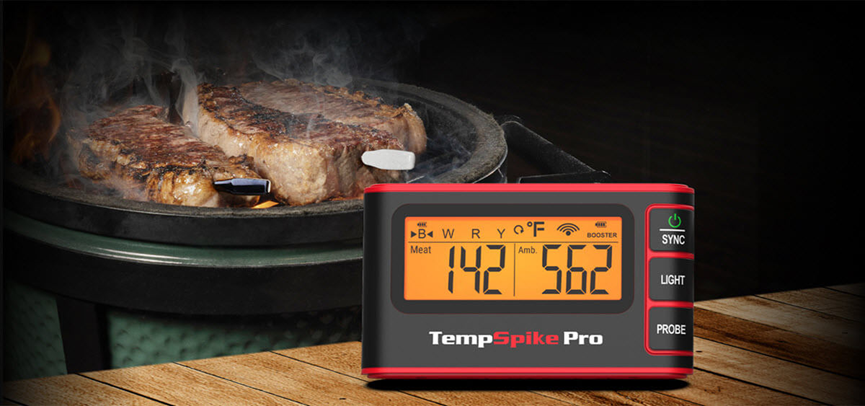
When you are juggling four different proteins, say, a prime rib, a whole chicken, a pork loin, and a rack of lamb, precision is the difference between a legendary meal and a dry disaster. This is where the TempSpike Pro Wi-Fi Meat Thermometer becomes your secret weapon.
l Truly Wireless Freedom: It’s a truly wireless meat thermometer, so each probe sits inside the food without cables hanging out of the oven or grill.
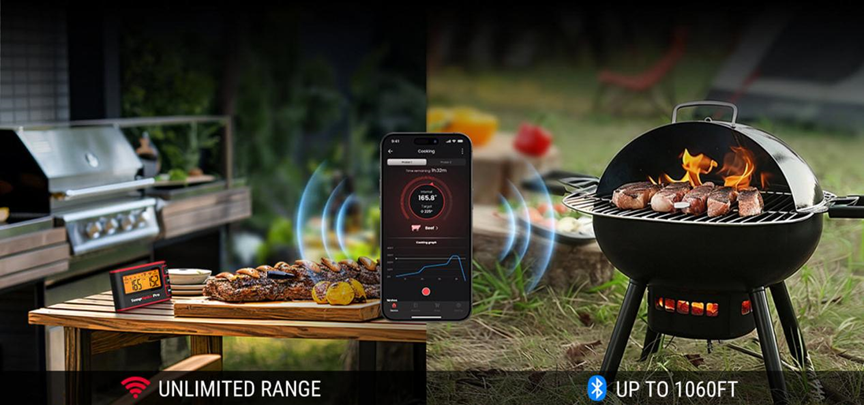
l Dual Wi-Fi & Bluetooth Connectivity: It supports both Wi‑Fi and Bluetooth, giving you flexibility to monitor temperatures from up to 1060ft away via Bluetooth or from anywhere over your home Wi‑Fi network.
l Monitor up to 4 dishes at once: You can monitor up to four dishes simultaneously, so one device covers an entire party menu.
l Track Internal & ambient temperatures: Each wire-free probe can track both internal food temperature and ambient temperature around it, which is helpful if you’re using the oven and grill at the same time.
l Smart app for remote monitoring: Through the connected app, you can set target temperatures for each probe and receive real‑time alerts on your phone when those temperatures are reached.
How TempSpike Pro makes crowd cooking easier in practice
Imagine this common holiday or party scenario:
l Probe 1 in a beef roast in the oven
l Probe 2 in a tray of bone‑in chicken thighs on the other rack
l Probe 3 in a pan of baked mac and cheese to make sure the center hits a safe, creamy temperature
l Probe 4 on the grill outside, monitoring the ambient heat and a batch of sausages for appetizers
With TempSpike Pro:
Set individual targets for each dish
In the app, you choose or custom‑set target internal temperatures—for example, 160–165°F for chicken, your preferred doneness for beef, and a specific temp for the mac and cheese center. The grill probe can watch both the sausages and the grill’s ambient temperature so you know if the heat spikes or drops.
Let the probes track while you do other tasks
Because each probe is truly wireless and reports both internal and ambient temperatures, you can close the oven door and grill lid and focus on:
l Tossing salads
l Mixing dips or appetizers
l Refilling drinks
l Talking with guests
Rely on alerts instead of constantly checking
When a dish hits its target temperature, your phone notifies you. You can pull the chicken as soon as it’s done, let the beef roast coast to a perfect finish, and keep the appetizers from burning—even if you’re in another room.
Use the data to stagger finishing times
With four real‑time temperature graphs, you can see which dishes are cooking faster or slower than expected. If the roast is ahead, you can lower the oven slightly and bring the pace down. If the mac and cheese is lagging, bump the heat for the last 10–15 minutes or move it to a hotter rack.
Keep food warm without overcooking
Because TempSpike Pro also reads ambient temperature, you can keep dishes in a “warm zone” while monitoring that they don’t creep upward into overcooked territory. For example, you can rest a roast in a low oven or on a turned‑off grill, watching both the internal temp and the surrounding heat.
More tips to stay relaxed while feeding a crowd
Schedule “finish times,” not just start times
Instead of only writing “turkey in at 2:00,” plan backward from when you want to eat:
l Turkey done at 5:00 → in the oven at 2:30
l Potatoes done at 5:15 → start boiling at 4:15
l Mac and cheese browned at 5:10 → in the oven at 4:30
Let TempSpike Pro handle the exact moment food reaches temperature while you follow your timeline.
Build in buffers and resting time
Large cuts of meat and casseroles benefit from resting:
l Use that 10-20 minutes to finish gravy, toast bread, or toss salad.
l Because your thermometer tells you the internal temperature, you can pull meats slightly before the final target, letting carryover heat bring them the rest of the way while they rest.
Don’t be afraid to serve in waves
For casual gatherings, you can:
l Send out appetizers first (with TempSpike Pro watching anything hot in the oven or on the grill).
l Follow with mains and sides when they’re ready.
l Finish with dessert that was made ahead and only needs plating or a quick warm‑up.
Guests care more about relaxed hosts and tasty food than about everything hitting the table at the exact same moment.
Final Thoughts
Cooking for a crowd doesn’t have to mean being trapped in the kitchen while everyone else enjoys the party. When you:
l Choose a simple, scalable menu
l Do as much prep as possible ahead of time
l Use self‑serve stations and delegate small tasks
l And rely on a tool like TempSpike Pro Wi‑Fi Meat Thermometer to monitor four dishes simultaneously and alert you when food is perfectly cooked
you can manage multiple dishes with confidence and spend more time actually enjoying your guests. With good planning and smart temperature monitoring, “Cooking for a Crowd? How to Monitor 4 Dishes Simultaneously?” stops being a stress question and becomes something you’re fully prepared to handle.