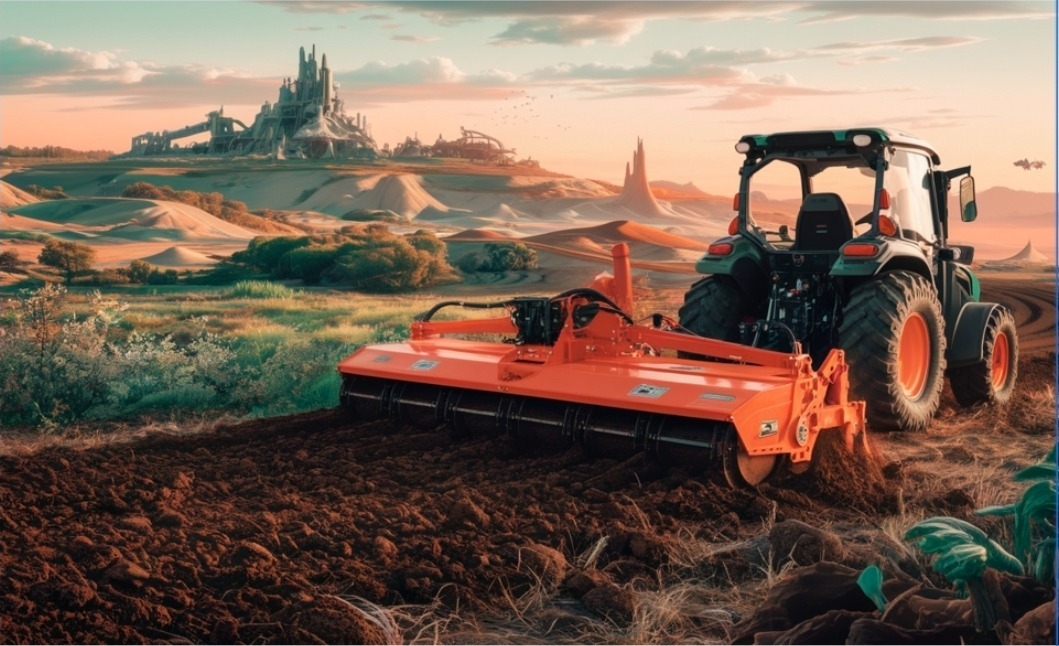
Science fiction has long grappled with a fundamental question: how do distant colonies feed themselves? While starships and terraforming dominate the genre’s imagination, the unglamorous work of soil preparation rarely gets its due. Yet without functional agriculture, even the most advanced settlement fails. Among the tools that bridge this gap between speculative fiction and agronomic reality is the cultipacker—a device that, when reimagined for alien environments, reveals how deeply practical concerns shape believable worldbuilding.
A cultipacker compacts soil and breaks up clumps to improve seed-to-soil contact, a critical step in establishing crops. In earthbound agriculture, these rollers have evolved over centuries alongside farming technology itself, adapting to different soil types and planting methods. Transposed to fictional colonies on Mars, Europa, or generation ships, the cultipacker becomes a lens through which writers can explore how human ingenuity adapts to radically different conditions.
Engineering Cultipackers for Extraterrestrial Terrain
The challenge of adapting agricultural equipment for alien worlds goes beyond simple mechanical adjustments. Consider the variables: gravity that might be a fraction of Earth’s, atmospheric pressure that could crush or explode conventional machinery, and soil composition that bears little resemblance to terrestrial loam. A cultipacker designed for these conditions would need fundamental reimagining.
- Variable-density rollers: Adjustable weight distribution to account for different gravitational fields, ensuring proper soil compaction whether on low-gravity moons or high-gravity super-Earths
- Sealed pressure systems: Protection against corrosive atmospheres or vacuum conditions while maintaining operational flexibility
- Modular tread designs: Interchangeable roller surfaces to handle everything from volcanic regolith to frozen methane substrates
- Autonomous navigation: Integration with mapping systems to work terrain too hazardous for human supervision
These adaptations aren’t purely speculative. Research into space agriculture by NASA has already identified soil preparation as a critical bottleneck in closed-loop life support systems. The cultipacker, whether pulled behind a rover or integrated into automated farming arrays, represents the kind of unglamorous but essential technology that makes long-term space habitation plausible.
The Agronomic Advantages That Transfer Across Worlds
What makes cultipackers valuable on Earth translates directly to their fictional utility. The physics of seed germination doesn’t change just because you’re farming under a dome on Titan. Seeds still need consistent contact with growing medium, moisture retention remains critical, and competing vegetation—or its alien equivalent—must be suppressed.
- Moisture conservation: Compacted soil reduces water loss through evaporation, crucial where every drop must be recycled or imported at enormous cost
- Thermal regulation: Firmer seedbeds maintain more stable temperatures, protecting germinating seeds from the extreme temperature swings common on worlds without thick atmospheres
- Root establishment: Proper soil density gives developing roots the resistance they need to anchor and spread, particularly important in low-gravity environments where plants struggle with structural support
- Contamination control: Well-prepared beds reduce the risk of unwanted organisms establishing themselves, whether terrestrial weeds that hitchhiked to the colony or native microbes that might prove harmful
Integrated Seeding Systems for Resource-Constrained Colonies
In settings where labor is scarce and efficiency paramount, combining multiple functions into single passes becomes essential. A cultipacker seeder—which plants and firms soil simultaneously—exemplifies the kind of practical integration that makes fictional colonies feel lived-in rather than merely imagined.
- Reduced equipment footprint: Critical when storage space comes at a premium and every cubic meter must justify its existence
- Minimized soil disturbance: Fewer passes mean less compaction damage and reduced risk of disturbing carefully engineered growing substrates
- Precision seed placement: Automated systems can adjust depth and spacing in real-time based on soil sensors, maximizing germination rates when replacement seeds might be years away
- Data integration: Modern seeders track exactly what was planted where, feeding into colony-wide agricultural management systems that optimize crop rotation and resource allocation
A cultipacker seeder — which plants and firms soil simultaneously — exemplifies this kind of practical integration; manufacturers like Packer Maxx, Brillion, and Landoll have built entire product lines around exactly this dual-function principle.
Sustainability Through Soil Management
Closed-loop ecosystems—whether on generation ships, underground Martian settlements, or floating cities in Venus’s upper atmosphere—depend on maintaining soil health across generations. Cultipackers contribute to this sustainability in ways that resonate with contemporary environmental concerns while serving narrative purposes.
Proper soil preparation reduces the need for chemical inputs by creating conditions where crops can thrive naturally. In a colony where every imported chemical represents a failure of self-sufficiency, this matters enormously. The cultipacker’s role in weed suppression means less herbicide use. Its moisture retention reduces irrigation demands. Its contribution to soil structure supports the microbial communities that drive nutrient cycling.
- Reduced erosion: Firmer soil resists wind and water erosion, critical in environments where topsoil can’t simply be replaced from surrounding land
- Carbon sequestration: Well-structured soil stores more organic carbon, supporting the atmospheric management systems that keep habitats breathable
- Biological activity: Proper compaction creates the pore spaces and moisture conditions that beneficial soil organisms need, maintaining the living component of growing substrates
Matching Equipment to Fictional Landscapes
Different colony scenarios demand different approaches to soil preparation. A sprawling agricultural zone on a terraformed planet has different needs than hydroponic tunnels carved into an asteroid. Cultipackers come in varieties that map onto these diverse settings, each with distinct advantages.
- Pull-behind models: Suited to large-scale operations where mechanized vehicles already exist for other purposes, maximizing equipment versatility
- Compact plot rollers: Designed for smaller growing areas, ideal for personal garden plots that supplement communal agriculture or experimental research stations
- Water-filled variants: Adjustable weight through liquid ballast, useful where gravity varies or where the same equipment must serve multiple soil types
- Powered autonomous units: Self-propelled systems that can work continuously without human supervision, essential for colonies with small populations spread across large areas
The choice of equipment reflects broader decisions about how a fictional society organizes food production. Centralized agricultural zones suggest different social structures than distributed personal plots. The presence of autonomous farming equipment implies certain levels of AI development and manufacturing capability. These details accumulate into worldbuilding that feels coherent and considered.
Speculative Evolution of Agricultural Technology
Looking forward—or outward, to more distant fictional futures—cultipackers might evolve in directions that current technology only hints at. The trajectory from simple rollers to smart, adaptive systems offers rich territory for speculation grounded in existing trends.
- Swarm systems: Multiple small units working in coordination rather than single large machines, providing redundancy and adaptability
- Biomimetic designs: Equipment that mimics how natural processes prepare soil, perhaps incorporating living components that condition substrate while compacting it
- Molecular-scale manipulation: Advanced nanotechnology that restructures soil at microscopic levels, optimizing conditions for specific crop varieties
- Predictive modeling: AI systems that analyze years of growing data to determine optimal preparation for each plot based on upcoming crop rotations and environmental forecasts
These speculations extend current agricultural research into plausible futures. They also serve narrative purposes, creating opportunities for conflict when systems fail, for character development as colonists master new technologies, and for thematic exploration of humanity’s relationship with the land—even when that land is an artificial construct light-years from Earth.
Why Agricultural Details Matter in Science Fiction
The inclusion of specific tools like cultipackers does more than add verisimilitude. It signals that a fictional world operates according to consistent internal logic, that the author has thought through the practical implications of their premise. Readers notice when colonies appear fully formed without consideration of how basic needs are met. They also notice when those details are present, even if only sketched in background.
- Character grounding: Colonists who work with real equipment doing necessary jobs feel more authentic than generic “farmers” performing undefined agricultural tasks
- Conflict generation: Equipment failures, resource shortages, and technical challenges create organic plot complications that arise from the setting itself
- Thematic depth: Agricultural details support themes about sustainability, self-sufficiency, and humanity’s ability to adapt to new environments
- Immersive worldbuilding: Specific, accurate details about one aspect of colonial life suggest similar depth exists throughout the setting, even in areas not directly shown
Science fiction at its best extrapolates from current reality to explore how technology and society might develop. Agricultural technology, including humble tools like cultipackers, provides a foundation for that extrapolation. By understanding how these implements function and why they matter, writers can build colonies that feel like places where people actually live and work, not just backdrops for adventure.