Most heating and cooling equipment spends far more time running at partial load than at full capacity. Mild afternoons, nighttime setbacks, cloud cover, and variable occupancy all reduce the demand on the system. When loads drop, the equipment must still manage temperature, humidity, air mixing, and filtration without wasting energy or creating comfort swings. Partial load behavior also reveals how well components work together, including the thermostat logic, blower control, duct design, and refrigerant circuit stability. A system that handles partial load smoothly tends to feel quieter, steadier, and less drafty, while a system that struggles may short-cycle, leave rooms uneven, or allow humidity to drift. Understanding what changes at lower demand helps homeowners recognize why comfort can vary even when the outdoor temperature seems easy.
What changes at lower demand
- Cycling, Run Time, and Temperature Swing
At partial load, the biggest change is the equipment’s runtime and how often it starts and stops. Single-stage units tend to satisfy the thermostat quickly when demand is low, then shut off and restart soon after as the indoor temperature drifts again. This pattern creates noticeable temperature swings because the room warms or cools between cycles, and it can also feel less comfortable near supply registers because each start delivers a burst of air that is colder or hotter than the room. Frequent starts wear out compressors and motors and reduce the time the coil has to stabilize. When the cooling coil runs only briefly, it may not stay cold long enough to remove much moisture, so the home can feel clammy even if the thermostat is satisfied. Longer, steadier cycles usually improve comfort because air movement and coil temperature remain more consistent, and the duct system has time to distribute conditioned air into distant rooms.
- Modulation, Airflow Control, and Humidity
Equipment designed for partial load conditions uses staging or modulation to match output to demand. Two-stage furnaces and compressors reduce capacity when the thermostat is near the setpoint, whereas variable-speed systems can adjust in smaller increments. This reduces short cycling and helps maintain a stable indoor temperature. Blower behavior matters too. If airflow remains too high during light cooling demand, the coil may not cool enough to remove moisture efficiently, and humidity control can suffer. If airflow is too low, the coil can become excessively cold, risking frost and further reducing airflow. Many modern controls adjust blower speed to keep the coil within an optimal range, balancing sensible cooling and latent moisture removal. In service discussions with Authorized Heating & Air Conditioning, technicians often focus on how staging and blower profiles are configured, because incorrect control settings can make a capable system feel uneven in mild weather. Small control tweaks can shift run time and coil performance in ways that are noticeable in comfort.
- Refrigerant Circuit Behavior and Coil Stability
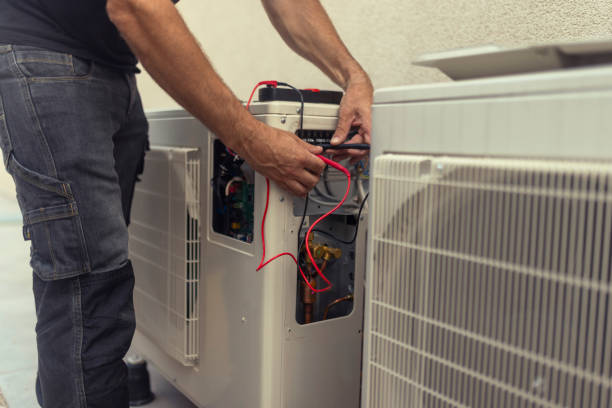
During partial-load operation, the refrigerant circuit operates at different pressures and temperatures than on the hottest or coldest days. In cooling mode, the compressor may run at a lower speed or at a lower stage, which changes the suction and discharge pressures and the temperature difference across the evaporator coil. Expansion devices such as thermostatic or electronic expansion valves respond to these shifts by controlling superheat. Still, their behavior can be affected by changes in airflow, dirty filters, or uneven return-air temperatures. Coil stability is important because it influences both capacity and moisture removal. If the coil temperature floats too warm, the humidity control weakens. If the coil runs too cold, it can collect excessive condensate and, in some cases, frost, which blocks airflow and creates a spiral of reduced performance. Partial-load conditions also highlight duct leakage and insulation issues because lower capacity leaves less margin to overcome losses. The system may still satisfy the thermostat, but some rooms may lag due to reduced airflow.
- Heat Pump Performance in Mild Weather
Heat pumps often operate most efficiently when outdoor temperatures are moderate, so partial-load conditions are common. In heating mode, a variable-speed heat pump may run longer at lower output, which feels more even than a high-output burst from a single-stage unit. Defrost behavior is also influenced by partial load operation. When outdoor conditions are cool and damp, frost can form on the outdoor coil even when heating demand is low. The control system must determine when to defrost based on coil temperature, run time, and sensor inputs, so partial-load periods can still trigger defrost events that temporarily reduce indoor heat. Auxiliary heat may stage on if the thermostat calls for more heat than the compressor stage can deliver quickly, especially during recovery from a setback. Proper thermostat configuration and staged control help keep auxiliary heat from running more than needed. When the controls are coordinated well, partial-load heating can provide steady comfort with fewer noticeable swings.
Partial Load Keeps Homes Stable
Partial load conditions are the normal operating environment for many homes, so performance during these periods shapes daily comfort more than peak capacity. Systems that stage or modulate can run longer and more steadily, reducing temperature swings and improving moisture control. Coil stability and refrigerant control matter because pressures and temperatures shift at lower loads, and small airflow issues can have a greater impact on humidity and distribution. Heat pumps often perform well in mild weather, but defrost and auxiliary heat decisions can still affect comfort if controls are not properly configured. Thermostat logic, zoning design, and blower profiles work together to prevent short cycling and maintain consistent airflow. With clean components and well-tuned controls, partial load operation can feel quiet, even, and dependable throughout the day.
Understanding the intricacies of partial load performance in HVAC systems can significantly enhance energy efficiency and operational effectiveness. By optimizing these systems, building managers can achieve a balance between comfort and cost, ensuring that energy consumption aligns with actual demand. This approach not only reduces unnecessary energy expenditure but also prolongs the lifespan of the equipment. For those interested in delving deeper into the technical aspects and benefits of partial load performance, it’s essential to explore comprehensive resources. Learn more about how these systems can be tailored to meet specific needs and improve overall performance.
Understanding the intricacies of partial load performance is crucial for optimizing HVAC systems. When systems operate at partial load, they often consume less energy, leading to cost savings and increased efficiency. This is particularly important in regions with fluctuating temperatures, where systems frequently adjust to maintain comfort. For those seeking expert advice or installation services, consulting an experienced HVAC contractor in Platte City can provide valuable insights into system performance and maintenance. By leveraging local expertise, homeowners and businesses can ensure their systems are not only efficient but also tailored to specific environmental needs.