Short cycling is one of the most frustrating HVAC problems because it appears the system is responsive, yet still fails to deliver steady comfort. The unit turns on, runs for a few minutes, and shuts off, repeating the pattern throughout the day. This can increase energy use, wear on motors and compressors, temperature swings, and make humidity harder to control. Many homeowners assume the thermostat is the cause, but short cycling can occur even when the thermostat is accurate and functioning normally. Contractors often fix the issue without replacing or relocating the thermostat by focusing on what causes the system to stop early: airflow restrictions, pressure problems, safety interruptions, staging configuration, heat-transfer limitations, and distribution imbalance. By testing the system’s behavior under real conditions and correcting the underlying drivers, they can lengthen run times, stabilize indoor conditions, and reduce unnecessary starts. The goal is to restore a smooth operating rhythm so comfort feels consistent, and the equipment runs in a healthier pattern.
Fix the Cause, Not the Controller
Confirming the Cycle Pattern and Ruling Out False Stops
Contractors start by confirming the short cycling pattern in a way that separates “thermostat ended the call” from “equipment stopped itself.” They check how long the system runs, how long it stays off, and whether the thermostat is still calling when the system shuts down. This matters because short cycles caused by thermostat satisfaction differ from those caused by safety controls or internal limits. Contractors may observe the call signal at the control board, review thermostat history if available, and watch what happens during multiple cycles to avoid diagnosing based on a single start-stop event. They also ask when the issue is most noticeable: mild weather, peak heat, nighttime, or after long periods. These details help determine whether the system is shutting down quickly due to oversupply near the thermostat or stopping early due to overheating, icing, or condensate safety switches. The initial phase is about building a reliable picture of the pattern so that every subsequent test has a purpose. Once the pattern is clear, contractors can focus on system-side causes that can be corrected without touching thermostat hardware.
Airflow Restrictions That Trigger Short Cycling Indirectly
Airflow problems are a leading cause of short cycling, and they don’t require thermostat changes to fix. Contractors inspect the filter, return grilles, supply registers, blower wheel, and indoor coil because even small restrictions can reduce airflow enough to change how the system behaves. In cooling, low airflow can cause the evaporator coil to get colder than intended, increasing the risk of icing and unstable temperature delivery that leads to frequent cycling. In heating, low airflow can increase the temperature rise through the furnace, potentially triggering high-limit behavior that shuts off the burners while the blower continues, creating a repeated pattern that feels like short cycling. Contractors measure static pressure to determine whether the blower is operating against excessive resistance, and they compare readings against equipment targets. They may recommend the correct filter type and size, clean the coil if it is loaded with dust, and restore airflow pathways by addressing blocked returns or closed registers. A qualified HVAC contractor often finds that once airflow returns to a healthy range, cycle length improves naturally because the equipment can transfer heat steadily without protective interruptions or rapid localized temperature changes.
Condensate and Drain-Related Interruptions That Look Like Cycling
In many systems, condensate management can stop cooling calls without showing a dramatic error on the thermostat. Contractors inspect the condensate drain line, trap configuration, and float switches that protect the system from overflow. A partially clogged drain can cause water to back up into the pan, lifting the float switch and breaking the cooling call, causing the compressor to shut off early. When the water slowly drains or the float resets, the system starts again, creating a repeating cycle that feels like thermostat-driven short cycling. Contractors clear drain lines, check for algae buildup, confirm proper slope, and ensure the trap is installed correctly for negative-pressure air handlers. They also verify that the float switch wiring is sound and that the switch is positioned correctly, because a slightly misaligned switch can trip too easily during normal condensate flow. Fixing this type of short cycling doesn’t require a thermostat replacement; it only requires restoring reliable condensate removal so the system can run continuously during a call without interruption from a safety device.
Coil Heat Transfer Problems That Cause Quick Shutdown Behavior
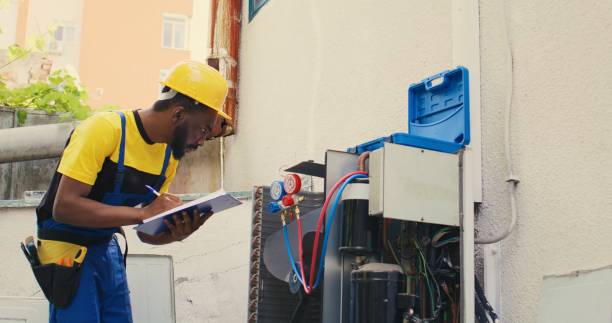
Short cycling can also result from heat-transfer problems that cause the system to struggle under load. Contractors inspect both the indoor and outdoor coils because a dirty coil reduces heat transfer and can push the system toward abnormal pressures and temperatures. During cooling, a clogged outdoor condenser coil can raise the head pressure, causing the compressor to shut down under internal protection and then restart, creating a short-cycle pattern that may not appear as a clear thermostat error. A weak condenser fan can create similar effects. Contractors clean coils when needed, verify fan speed and capacitor condition, and check refrigerant charge using temperature and pressure relationships rather than guesswork. Low refrigerant can lead to low coil temperatures and icing, while incorrect charge can reduce capacity and destabilize operation. Contractors also evaluate airflow across the coil because airflow and refrigerant behavior are linked; a coil can behave “wrong” even with correct charge if airflow is restricted. By restoring clean heat transfer surfaces and stable refrigerant operation, contractors often eliminate short cycling without touching thermostat wiring or programming.
Duct Pressure, Zoning, and Distribution Triggers
Distribution issues can shorten cycles by satisfying one area too quickly while leaving others behind. Contractors check whether supply air is dumping near the thermostat location or returning too quickly through nearby returns, creating rapid saturation. Without moving the thermostat, they can correct the delivery pattern by balancing airflow, adjusting dampers, and improving return pathways so the system mixes air more evenly. In zoned systems, short cycling can happen when only a small zone calls, leaving too little duct area open for the system’s airflow. This raises static pressure and can lead to noise, reduced airflow, and protective behavior. Contractors test zone damper operation, verify bypass strategies, if present, and may reconfigure zone priorities or damper behavior to ensure adequate airflow during calls. They also look for crushed flex ducts, partially closed dampers, and blocked registers that reduce effective duct area. Correcting distribution doesn’t require a thermostat swap; it requires the system to deliver and return air in a way that supports stable runtime rather than rapid on-off operation.
Testing After Each Adjustment
After each correction, contractors retest the cycle behavior instead of stacking multiple changes at once. They measure static pressure again to confirm that the resistance has dropped and airflow has improved. They monitor supply and return temperatures to verify stable heat transfer over a full run, not just during the first minute. During cooling, they watch for signs of coil icing and confirm that condensate flow remains steady without a float switch interruption. In heating, they verify that the temperature rise remains within an acceptable range and that the limit switches do not open during operation. They also time cycle length to confirm that the system now runs longer and stops for normal reasons.
Stabilizing Run Time Through Staging and Fan Configuration
When equipment supports staging or variable-speed operation, contractors can often reduce short cycling by configuring staging and fan behavior correctly—without changing the thermostat itself. They check control board settings, dip switches, and wiring that determine how the system stages, how long it stays in low output, and how it responds to demand. If the system jumps to high output too quickly, it can raise the temperature rapidly near the thermostat and shut off, especially in mild weather. Encouraging longer low-stage runtime can smooth operation and improve humidity control. Contractors also evaluate fan settings that influence airflow and comfort, such as continuous fan modes or blower delays that help distribute conditioned air after the heating or cooling call ends. Adjustments must remain within manufacturer specifications, but many systems allow meaningful tuning that reduces rapid cycling. This approach targets the system’s behavior rather than the thermostat, ensuring the equipment runs more steadily and matches the home’s load. When staging and airflow timing are tuned, the home often feels more even, and the system cycles less aggressively.
Fixing short cycling without changing the thermostat is often possible because many root causes live elsewhere in the system. HVAC contractors begin by confirming whether the thermostat ended the cycle or whether safety controls, airflow limits, or heat-transfer problems stopped the cycle early. They restore airflow by addressing filters, coils, blower buildup, and return pathways, and eliminate drain-related interruptions by clearing condensate lines and verifying the function of the float switch. They also correct coil and refrigerant issues that trigger protective shutdowns, and they improve duct distribution and zoning behavior that can cause rapid satisfaction or pressure problems. After each adjustment, they verify the results using measurements and multi-cycle observations to ensure the change truly improved stability. When the underlying causes are corrected, the thermostat can remain untouched as the system returns to longer, smoother cycles that protect equipment, improve humidity control, and keep comfort steady throughout the home.
In some cases, homeowners in Suffolk, VA might experience short cycling due to issues unrelated to the thermostat. It’s crucial to inspect the HVAC system thoroughly, as problems like clogged filters or blocked vents can also lead to inefficient cycling. Regular maintenance checks can help identify these issues early, ensuring the system runs smoothly. Additionally, consulting with local experts can provide insights into specific environmental factors affecting HVAC performance in the area. By addressing these underlying causes, homeowners can enhance their system’s efficiency and longevity without the need for thermostat adjustments.