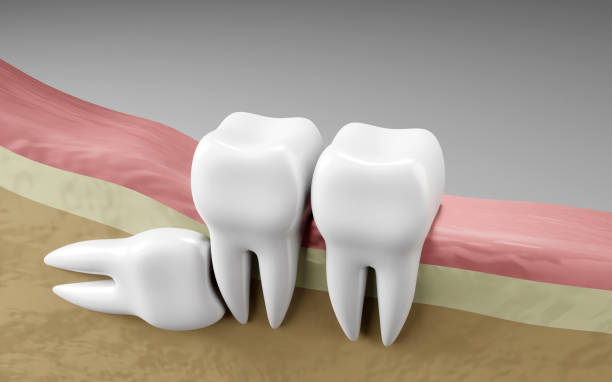
Wisdom teeth, also known as third molars, are the last set of permanent teeth to emerge, typically appearing between the late teenage years and mid-twenties. For some individuals, these teeth grow in without incident and align properly with the rest of the dentition. For others, they become trapped beneath the gums or develop at awkward angles, leading to discomfort and potential oral health complications. Understanding the distinction between impacted and fully erupted wisdom teeth is essential for making informed decisions about monitoring, treatment, and long-term dental care. We will explore how these two conditions differ in development, symptoms, risks, and management considerations.
Key Differences in Development, Symptoms, Risks, and Treatment
- Development and Positioning in the Jaw
Impacted wisdom teeth are those that fail to emerge completely through the gum tissue due to insufficient space, obstruction by neighboring teeth, or improper angulation within the jawbone. They may remain fully encased in bone, partially break through the gum, or grow sideways against adjacent molars. In clinical settings such as North Vancouver Be Well Dental, diagnostic imaging is often used to evaluate the exact position and orientation of these teeth before determining an appropriate course of action. In contrast, fully erupted wisdom teeth have successfully emerged into the oral cavity and align vertically with the surrounding teeth. Their roots are typically well-formed, and they occupy a functional position in the dental arch.
The developmental pathway of impacted teeth often begins with crowding in the posterior jaw, where limited arch length prevents normal eruption. Radiographic imaging frequently reveals these teeth positioned horizontally, mesially, or distally. Fully erupted wisdom teeth, however, tend to follow a more predictable eruption pattern, integrating into the bite without being trapped beneath soft or hard tissue. This fundamental difference in positioning influences not only comfort levels but also the type of clinical attention required.
- Symptoms and Daily Oral Function
The symptoms associated with impacted wisdom teeth can vary widely, ranging from mild pressure to significant pain and swelling. Because these teeth may remain partially covered by gum tissue, bacteria and food debris can accumulate around them, leading to inflammation called pericoronitis. Individuals may experience difficulty opening their mouths, tenderness near the jaw, or even referred pain toward the ear or throat. Fully erupted wisdom teeth, on the other hand, may remain asymptomatic if they are properly aligned and can be cleaned effectively.
When these teeth function like other molars, they can contribute to chewing without causing irritation. However, even erupted third molars can become problematic if they are difficult to brush or floss due to their posterior location. The key distinction lies in accessibility and tissue coverage: impacted teeth are often associated with episodic discomfort and an increased risk of infection, while fully erupted teeth are more likely to present routine maintenance challenges rather than acute inflammatory episodes.
- Oral Health Risks and Long-Term Consequences
Impacted wisdom teeth are at higher risk of complications because their partial or complete entrapment creates an environment conducive to bacterial growth. Cysts may form around the crown of an unerupted tooth, potentially affecting surrounding bone and adjacent teeth. There is also an elevated risk of decay on the neighboring second molar, particularly when the impacted tooth presses against it at an angle. In comparison, fully erupted wisdom teeth pose risks primarily related to hygiene. If these teeth are misaligned or difficult to access, plaque buildup can lead to cavities or periodontal problems over time.
However, the structural threat to surrounding bone and teeth is generally lower than that associated with impaction. Impacted teeth can also contribute to the shifting of adjacent teeth when pressure is significant, although the extent of this movement varies among individuals. Understanding these distinct risk profiles helps patients and dental providers evaluate whether observation or removal is the appropriate course of action.
- Diagnostic Evaluation and Monitoring
Diagnostic assessment plays a central role in distinguishing between impacted and fully erupted wisdom teeth. Impacted teeth are commonly identified through panoramic radiographs, which reveal their orientation, depth within the jaw, and proximity to anatomical structures such as nerves and sinuses. A clinical examination may show swollen gums or partially visible crowns. Fully erupted wisdom teeth, in contrast, are visible during routine dental checkups and can be evaluated for alignment, occlusion, and surface integrity.
Monitoring impacted teeth often involves periodic imaging to detect changes in position or the development of pathology. Fully erupted teeth require consistent evaluation for decay, gum health, and contribution to the overall bite relationship. The decision to intervene depends on factors such as pain, infection history, and structural concerns. By distinguishing between hidden impaction and complete eruption, dental professionals can tailor preventive strategies, avoid unnecessary procedures, and promptly address genuine risks.
- Treatment Approaches and Recovery Considerations
The management of impacted wisdom teeth frequently involves surgical removal, particularly when symptoms, infection, or structural damage are present. This procedure may require incisions in the gum tissue and, in some cases, sectioning of the tooth to facilitate extraction. Recovery can include temporary swelling, discomfort, and dietary adjustments while healing progresses. Fully erupted wisdom teeth, by contrast, may not require removal if they are healthy, functional, and maintainable with regular oral hygiene.
Wisdom teeth do not present a uniform experience for every individual. The contrast between impacted and fully erupted third molars lies in their positioning, symptom patterns, associated risks, and management pathways. Impacted teeth are often concealed within the jaw or partially covered by gum tissue, increasing the potential for infection and structural complications. Fully erupted wisdom teeth, while sometimes challenging to clean, may function normally without immediate intervention. Recognizing these differences allows patients to approach dental consultations with clarity and realistic expectations. With appropriate evaluation and ongoing monitoring, individuals can make informed decisions that support both comfort and lasting oral health stability.