Uneven heating is often blamed on the furnace, thermostat, or ductwork that supplies warm air into different rooms, but the return side of the system plays an equally important role. A heating system does not work efficiently by pushing warm air into rooms alone. It also depends on a clear path for cooler indoor air to travel back to the equipment so it can be reheated and recirculated. When return air pathways are weak, blocked, or poorly designed, comfort problems may appear; some rooms grow stuffy and overpressurized. In contrast, others stay cool and recover slowly, creating noticeable temperature differences throughout the home.
Why Airflow Balance Matters
- Why Return Pathways Affect Room Temperatures
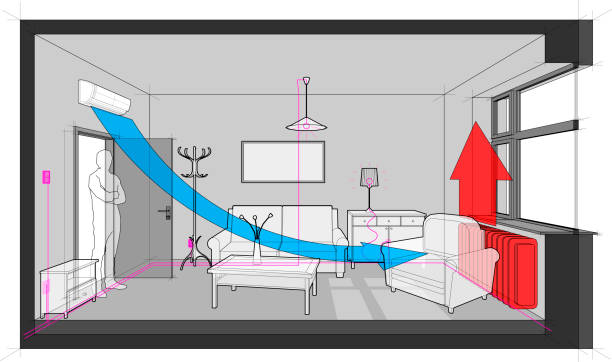
A forced-air heating system works as a loop, not a one-way delivery process. Warm air leaves the supply registers, moves through the room, and must eventually find its way back to the return side of the system. If that return path is restricted, the air circulation pattern becomes incomplete, and the room may not receive consistent heating even when the furnace is operating normally. This issue becomes more noticeable in homes with closed interior doors, isolated bedrooms, additions, or upper floors that lack sufficient return capacity. When air cannot move back freely, pressure builds up inside certain rooms, reducing the amount of warm supply air that can continue to enter the space. At the same time, the central return area may pull more strongly from nearby zones, causing those spaces to cycle differently than intended. The result is a house where some rooms feel warm quickly while others remain stubbornly cool. Homeowners often think the equipment is underperforming, but the real problem may be that the heated air has nowhere to complete its circulation path. Return airflow is therefore essential because it allows the system to move air evenly through the structure, rather than forcing the supply side to work against pressure imbalances and poor indoor air movement.
- Pressure Imbalances Create Comfort Problems
When return air pathways are inadequate, the effect is not limited to weaker circulation. The house can begin developing pressure imbalances that directly affect comfort and heating consistency. A bedroom with a supply vent and a closed door, for example, may become positively pressurized if there is no return grille, transfer grille, jumper duct, or undercut beneath the door that is large enough to allow air to escape efficiently. As pressure builds in that room, the supply airflow entering through the vent can decrease because the room is resisting more incoming air. This means the room may receive less warm air than the system is intended to deliver, even though the register is open and the furnace is running. In nearby areas, pressure may shift in the opposite direction, causing the return side to pull more aggressively and altering how air is distributed through the home. Contractors evaluating these issues in places like Hobe Sound, FL, often find that temperature complaints are tied as much to return limitations as to the heating equipment itself. These imbalances can also contribute to drafts, door movement, and differences in how quickly one room warms compared to another. Once pressure conditions become uneven, the home’s overall heating pattern becomes less stable, making it harder for the thermostat reading in one area to reflect how the rest of the house actually feels.
- Closed Rooms and Isolated Zones Need Relief
Many uneven heating problems become more obvious in homes with room layouts that interrupt natural airflow between supply and return points. Closed bedrooms, home offices, renovated garages, bonus rooms, and second-story spaces often struggle because the air delivered to them cannot return easily to the equipment. In an open area, air can move across hallways and back toward a central return with less resistance. In a more compartmentalized layout, however, that pathway can be interrupted by doors, narrow passages, or missing transfer routes. When this happens, the heating system may continue producing warm air, but certain rooms still lag because the circulation loop is incomplete. Return grilles inside individual rooms can solve part of the issue, but not every house is designed that way.
In some cases, contractors use jumper ducts, transfer grilles, or adequate door undercuts to relieve pressure and help air move back toward the central return path. These design features may seem minor compared to a furnace or duct trunk, yet they have a major influence on how evenly heat is shared from one area to another. Without them, isolated zones can behave almost like separate climate pockets inside the same house, making it difficult to maintain a balanced indoor temperature during colder weather.
A Complete Heating Loop Matters
Return air pathways are a major part of preventing uneven heating because they allow the HVAC system to operate as a full circulation loop rather than a simple stream of outgoing warm air. When return routes are undersized, blocked, or missing in key areas, room pressure shifts and airflow become unbalanced. That leads to cold spots, delayed heating, and comfort complaints that are often mistaken for equipment failure. A well-heated home depends on both the supply and return movements working together. Once that balance is restored, temperatures usually become more stable, airflow feels more consistent, and the heating system can perform with less strain across the entire house.
Ensuring that air can move freely back to the furnace is just as vital as the initial distribution of heat. When return paths are restricted, the resulting pressure imbalances often manifest as stubborn cold spots or drafts that compromise household comfort. Many homeowners find that consulting with a professional HVAC company serving Arlington TN can help identify these hidden architectural bottlenecks, such as undersized grilles or closed interior doors. By prioritizing unobstructed airflow and well-placed return vents, you allow the entire system to operate with much greater efficiency. This balanced approach not only eliminates temperature disparities but also reduces the mechanical strain that typically leads to premature equipment failure.