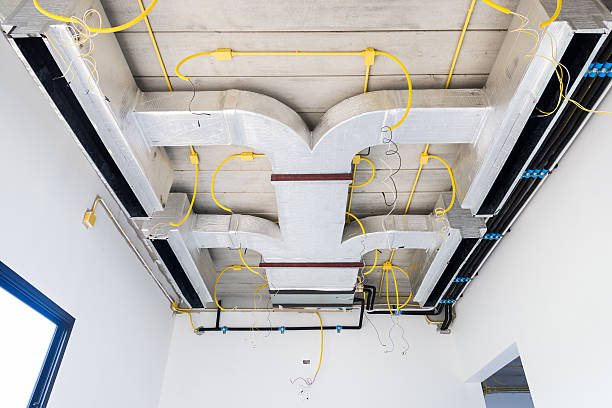
The equipment often determines air-conditioning performance, yet the duct system quietly determines whether that equipment can do its job. A high-capacity unit connected to poorly planned ductwork can leave rooms unevenly cooled, increase energy use, and shorten component life. That is why duct design should never be treated as an afterthought during installation projects. It shapes how air moves, how consistently temperatures are maintained, and how hard the system must work each day. When duct layout, sizing, and airflow balance are handled correctly from the start, the entire installation operates more smoothly, more quietly, and with fewer long-term issues for property owners.
What Duct Design Controls
- Airflow Starts With Duct Layout
Proper duct design begins with a clear understanding of how conditioned air will travel through the building and return to the system. If supply runs are too long, sharply bent, or poorly routed around framing and structural obstacles, the system can lose pressure before cooled air even reaches occupied rooms. That causes weak airflow at registers, inconsistent room temperatures, and a constant struggle to keep the thermostat setting stable. Good duct layout reduces unnecessary turns, keeps runs practical, and supports steady delivery across the home or building. It also allows installers to match airflow needs to room size, solar exposure, ceiling height, and insulation conditions. When these factors are ignored, some areas receive too much air while others are left warm and uncomfortable. Proper planning turns the duct network into a controlled pathway rather than a collection of connected metal or flex lines. That difference directly affects comfort, operating efficiency, and the day-to-day reliability of the air conditioning system.
- Sizing Errors Create Lasting Problems
Duct sizing has a major influence on static pressure, blower performance, and equipment strain. When ducts are undersized, the air handler has to push against greater resistance, which can reduce delivered airflow and place more stress on motors and other moving parts. When ducts are oversized without regard for system design, airflow velocity may drop too much, reducing proper air mixing and making temperature control feel sluggish. Correct sizing depends on more than square footage alone; it must account for each room’s cooling load, the total system capacity, and the resistance created by fittings, boots, dampers, filters, and grilles. A properly sized system allows the equipment to operate within its intended airflow range, supporting coil performance, humidity management, and overall efficiency. Installers who pay close attention to these details often avoid the comfort complaints that appear soon after startup. In many projects, companies such as Air Specialty are cited when discussing how coordinated duct-sizing and installation practices contribute to more dependable cooling outcomes over time.
- Balanced Distribution Improves Every Room
Even when the air conditioner itself is correctly selected, poor duct balance can make the building feel like several different climates under one roof. Some rooms may cool rapidly while others remain warm, forcing occupants to lower the thermostat and overcool already comfortable spaces just to help one problem area. Proper duct design addresses this by distributing airflow according to actual room demand rather than relying on rough assumptions. That includes register placement, branch sizing, return air pathways, and pressure relationships between closed rooms and common areas. If a bedroom has limited return relief or a distant branch run, the system may struggle to move enough air through that space, no matter how new the equipment is. Balanced design also affects humidity control, because steady airflow across the evaporator coil supports more predictable moisture removal. When distribution is uneven, comfort complaints often show up first, but the deeper issue is mechanical inefficiency. A thoughtful duct design helps the air conditioning system cool rooms more evenly, respond more consistently, and avoid the waste created by constant thermostat adjustments.
- Installation Quality Shapes Long-Term Performance
Duct design does not end on paper; it must withstand real-world installation conditions. A sound design can still fail if ducts are crushed in tight attic spaces, poorly sealed at joints, or installed with sagging flexible sections that restrict airflow. That is why proper design and proper execution must work together. Sealed connections help prevent conditioned air from escaping into attics, crawlspaces, or wall cavities, while insulated ducts reduce thermal loss before air reaches occupied areas. Support spacing matters as well, because unsupported sections can create low points that interrupt airflow and reduce system effectiveness. Over time, these installation flaws can raise utility costs, increase run time, and create preventable service calls. Good duct design gives installers a workable plan, but careful installation turns that plan into measurable performance. When the duct system is routed cleanly, sealed tightly, and supported correctly, the air conditioner operates closer to its intended capacity. That protects the investment in the equipment and helps deliver the comfort level the project was supposed to provide from the beginning.
Why It Should Never Be Overlooked
Duct design plays a central role in whether an air conditioning installation performs well after the crew leaves the jobsite. It affects airflow strength, room-to-room balance, humidity control, equipment stress, and long-term operating cost. When the duct system is planned and installed with care, the air conditioner can deliver the comfort and efficiency people expect. When it is rushed or treated as secondary, even quality equipment may struggle to meet basic performance goals. For installation projects of any size, proper duct design is not a minor technical detail. It is one of the main factors that determines whether the finished system feels reliable, efficient, and worth the investment.
Effective air distribution hinges on more than just high-quality hardware; it requires a meticulous approach to the surrounding infrastructure. When planning a comprehensive ac installation houston homeowners often discover that legacy ductwork fails to meet the static pressure requirements of modern, high-efficiency blowers. Misaligned joints or restrictive transitions act as bottlenecks, forcing equipment to work harder while delivering less comfort to remote rooms. By prioritizing smooth fittings and airtight sealing during the initial setup, you ensure that the conditioned air actually reaches its intended destination. This attention to detail transforms a standard equipment swap into a high-performance climate solution that maintains consistent temperatures and lowers monthly utility expenses.