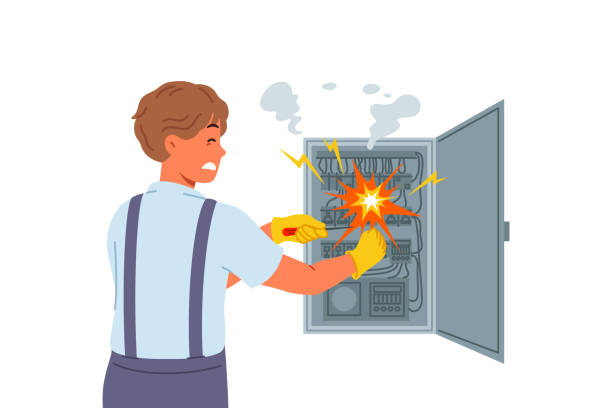
A furnace depends on stable electrical input as much as it depends on fuel and airflow. When a home experiences power surges, brownouts, or repeated voltage drops, furnace performance can change in ways that seem random at first. One day the unit starts normally, and the next day the blower hesitates, the ignition sequence fails, or the control board stops responding altogether. These electrical events can either gradually weaken components or damage them all at once. Repairing this kind of problem requires attention to both the furnace and the electrical conditions around it, because recurring instability can quickly undo a temporary fix.
What Fails First
- Control Boards Under Unstable Voltage Stress
One of the first areas checked in a furnace affected by power surges and voltage drops is the control board. Modern furnaces rely on this board to coordinate the ignition sequence, safety checks, blower timing, and thermostat communication. When voltage rises too sharply, delicate circuits can burn, relays can stick, and small protective elements on the board can fail. When the voltage falls too low, the board may not process signals correctly, leading to lockouts, missed ignitions, or repeated shutdowns that appear mechanical even though the root cause is electrical. A proper repair strategy includes visual inspection for scorch marks, swollen sections, cracked solder joints, and signs of overheated connectors. Technicians also test whether the board is sending the correct sequence of commands to the inducer motor, igniter, gas valve, and blower assembly.
In some cases, a board still powers on but no longer responds consistently, which makes the furnace appear unpredictable. Replacing the board without addressing the incoming power quality may only provide a short-lived solution. That is why repairs often involve checking grounding, measuring live voltage during startup, and confirming that the circuit serving the furnace is not sharing unstable loads with other equipment in the home. A control board damaged by electrical irregularities can mislead homeowners into thinking the furnace has multiple separate failures, when one unstable power source is actually triggering the entire chain of problems.
- Motors, Capacitors, and Ignition Components at Risk
Voltage problems not only affect the furnace brain; they also place heavy stress on the moving and ignition-related parts that initiate the heating cycle. A blower motor may struggle to start after repeated low-voltage conditions because the winding insulation has been stressed or the motor has overheated while operating below its designed power range. Capacitors can weaken after electrical spikes, reducing their ability to assist startup torque and causing the blower or inducer fan to lag, hum, or stall. Igniters may also fail earlier than expected when surges shorten their life or when unstable voltage changes the timing of the startup sequence. Repair solutions in this area begin with amp draw testing, capacitor measurement, inspection of wiring terminals, and confirmation that startup behavior matches the intended operating sequence. A motor that still runs but draws too much current can be a warning sign that electrical events have already reduced its reliability. In homes where seasonal electrical strain becomes noticeable, technicians may hear homeowners reference local conditions in Hampton when describing flickering lights and furnace interruptions during colder months. That kind of detail can help connect comfort complaints to a broader power-quality issue rather than a single worn part. By confirming the condition of motors, capacitors, and igniters together, repairs become more accurate and reduce the chance of replacing one failed piece while leaving another weakened component behind.
- Wiring Connections and Safety Devices Need Closer Review
A furnace exposed to power surges or voltage drops should also be inspected at its wiring connections and safety components, because unstable power can create hidden damage that is easy to miss during a quick service call. Wire terminals may loosen due to repeated heating and cooling, insulation can become brittle near overheated connections, and low-voltage wiring between the thermostat and the furnace may develop intermittent faults following electrical events. Limit switches, rollout switches, pressure switches, and transformer components can also be affected when inconsistent voltage changes how the system responds during startup and shutdown. A furnace transformer, in particular, may still energize the thermostat circuit while delivering unstable low-voltage output, disrupting the rest of the system. Repair strategies here focus on tightening and replacing compromised terminals, checking continuity through safety switches, testing transformer output under load, and verifying that no wire damage has occurred inside the cabinet or at the service switch. These steps matter because electrical irregularities can cause symptoms that resemble airflow or combustion issues. For example, a pressure switch error may appear to be vent-related when the actual problem is voltage fluctuation affecting inducer performance or control response. Careful electrical diagnosis prevents unnecessary part changes and helps restore dependable operation. It also protects the furnace from repeated shutdown cycles that can accelerate component wear and create confusion about whether the unit has one problem or several.
Restoring Reliability After Electrical Disruption
Furnaces affected by power surges and voltage drops often show symptoms that seem scattered, but the damage usually follows a logical path through the system. Control boards lose accuracy, motors struggle at low voltage, capacitors degrade, ignition components stop responding normally, and safety circuits begin behaving inconsistently. Effective repair depends on carefully tracing those effects rather than replacing parts based on guesswork. When the furnace wiring, controls, motors, and incoming power conditions are evaluated together, the repair becomes more durable and far easier to trust. Stable operation returns when damaged components are repaired, and the source of electrical stress is addressed simultaneously.
Many modern furnaces are equipped with sensitive digital control boards that serve as the central nervous system for heating operations. When voltage fluctuations compromise these circuits, the resulting erratic behavior often manifests as random shutdowns or a total failure to engage during peak demand periods. Homeowners who encounter persistent breaker trips or unresponsive thermostats might need more comprehensive electrical troubleshooting and upgrades to stabilize the power distribution within their property. Addressing these foundational issues ensures that high-capacity heating units receive a consistent current, which effectively shields delicate microprocessors from the cumulative stress of minor spikes. This proactive maintenance strategy significantly reduces the likelihood of catastrophic component failure while extending the overall operational lifespan of the entire HVAC system.